
Girl Advocates for Gender Equality (GAGE)
Background
Over the past five years, Stand With A Girl (SWAG) Initiative and Strong Enough Girls’ Empowerment Initiative (SEGEI) have consistently engaged in national and international advocacy efforts to promote gender equality in various sectors, particularly education and health, in Nigeria. In May 2020, SEGEI team members participated in an international virtual dialogue on meaningful girl and youth engagement in Generation Equality / Beijing+25, hosted by Plan International. The team brainstormed with girls in Nigeria and the United States and provided suggestions for the kind of support and resources needed to ensure girls, particularly those in marginalized communities, are informed and able to participate effectively in UN processes and events, in-country and abroad.
One of the key issues highlighted during this consultation was the lack of female mentors for girls to sustain lifelong sensitization, empowerment, and advocacy for gender equality. It is not enough to conduct advocacy training for girls over a few days; girls must be exposed to mentors who will inspire and educate them on how to use their voices. It is in light of this awareness that SWAG and SEGEI focused on structured mentorship as a key strategy for advancing gender equality in Nigeria and globally.
Overview
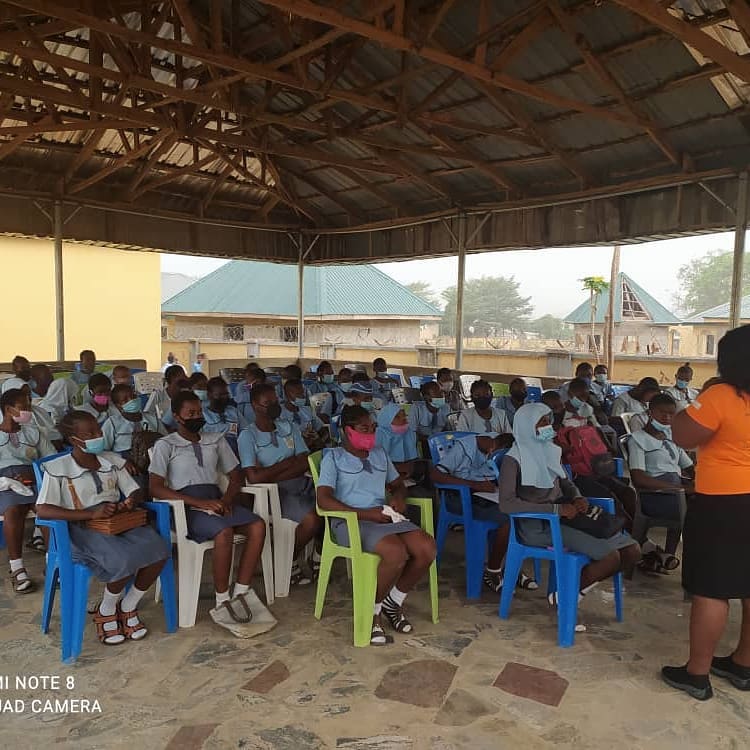
The Girl Advocate for Gender Equality (GAGE) project, equipping adolescent girls in Nigeria to be champions of gender equality through female mentorship — was implemented by Stand With A Girl (SWAG) Initiative and Strong Enough Girls’ Empowerment Initiative (SEGEI). The project built the knowledge and skills of 36 adolescent girl advocates (ages 10–19) from across Nigeria’s six geopolitical zones for the advancement of gender equality. These girls reflect the cultural, social, and economic diversity of girls in Nigeria, including those living in rural communities, girls who are differently abled, girls living with HIV, and other marginalized groups. The girls cascaded their training to other girls — indirectly reaching at least 300 more, and pushed for enabling policies and investment in girls’ education, health, and wellbeing.
Objectives
- Promote a supportive environment for the meaningful participation of adolescent girls in gender equality issues.
- Increase media (traditional and new) reportage on gender equality.
- Increase gender equality buy-in among relevant stakeholders, including parents, religious/traditional leaders, and teachers.
Activities
Capacity Building for Girl Advocates
Training for girl advocates on advocacy and leadership skills.
Media Capacity Building
Capacity building for media organizations on gender-sensitive reportage, including recognition of participating media organizations.
Mentorship Sessions
Mentorship sessions for girls on the project’s thematic areas.
Media Engagement
Media engagement and interviews featuring girl advocates.
High-Level and State Advocacy
High-level and state-level advocacy engagements with relevant government ministries.
Cascade Training in Communities
Girl Advocates cascaded advocacy training to other girls within their communities.
Community Projects by Girl Advocates
Girl Advocates led and implemented community-based projects.
Gender Policy Review
Review of existing gender policies conducted by consultants.
Intergenerational Dialogues
Girl-led intergenerational dialogues with male family heads, boys and young men, community and faith-based leaders, and teachers on gender issues and messaging.
Outcomes
- 36 girl advocates strengthened their advocacy and leadership capacities.
- A 6-month mentorship program supported sustained girl advocate development.
- Increased gender-sensitive reportage across participating media organizations.
- Advocacy training cascaded to over 300 girls beyond the original 36.
- Government engagement contributed to review of gender-related policies across three ministries.
Outputs / Deliverables
- Advocacy and leadership capacities built for 36 girl advocates.
- 12 media organizations, including 2 social media bloggers, trained on gender-sensitive reportage.
- 12 mentors assigned to groups of girl advocates based on selected thematic areas.
- Girl-centered interviews conducted with 5 media organizations.
- Review completed of gender policies from the Ministries of Health, Education, and Budget and Planning.


